Migration of SAP ECC systems to SAP S/4HANA
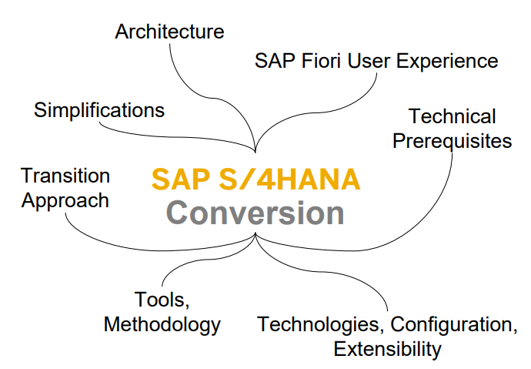
Migrating to S/4HANA involves moving from previous SAP versions (such as ECC or R/3) to this new platform. The process includes:
Initial assessment: Diagnosis of the current system and definition of objectives.
Approach selection:
- Greenfield: Implementation from scratch.
- Brownfield: Existing system conversion.
- Hybrid: Combination of both.
Technical preparation: Data cleansing, review of customizations, module compatibility.
Migration execution: Use of certified tools to transfer data and processes.
Testing and Validation: Ensure that everything works correctly.
Post-migration support: Adjustments, training and optimization.
S/4HANA MIGRATION PLAN
PHASE 1
•Define business objectives and reasons for migrating.
•Identify current systems and their status (ECC, R/3, etc.).
•Determine the migration approach: Greenfield, Brownfield, or Hybrid.
•Perform impact analysis: affected processes, customizations, critical data.
PHASE 2
•Update current systems to versions compatible with migration tools.
•Clean and purge data (archiving, removing duplicates, correcting inconsistencies).
•Evaluate add-ons, Z developments (custom code), and local adaptations.
•Enable appropriate infrastructure: on-premise, cloud, or hybrid.
PHASE 3
•Use official tools such as SAP Readiness Check and Software Update Manager (SUM).
•Migrate data and key processes using technical conversions.
•Execute unit, functional, and integration tests.
•Validate results with key users.
WHY MIGRATE TO S/4HANA CLOUD?